
Top-discharge basket centrifuges
KBS / KMN
Top-discharge basket centrifuges
Recover solids from the top of the basket. KBS uses sedimentation; KMN uses filtration. Both ranges include small laboratory models and production sizes.
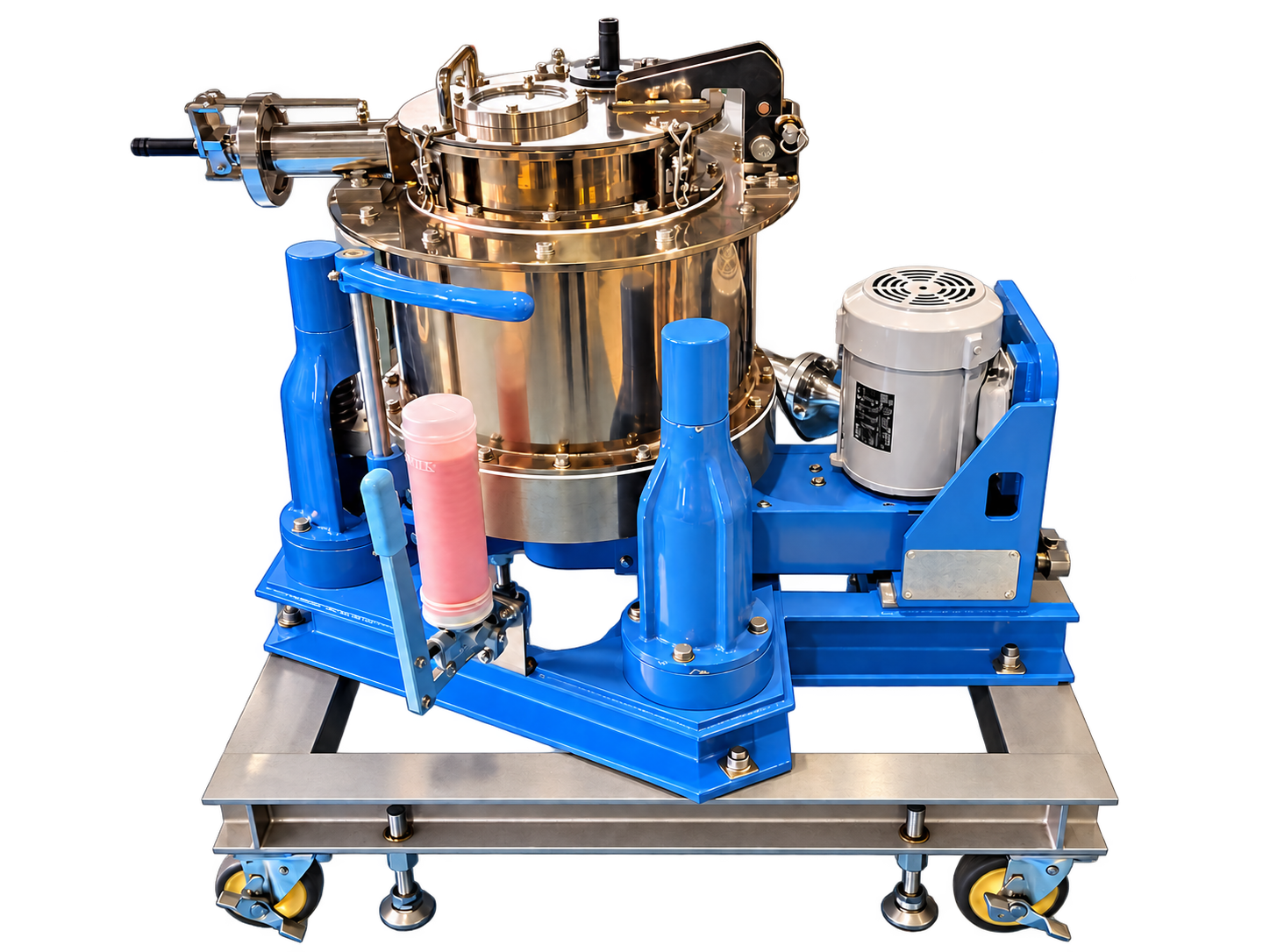
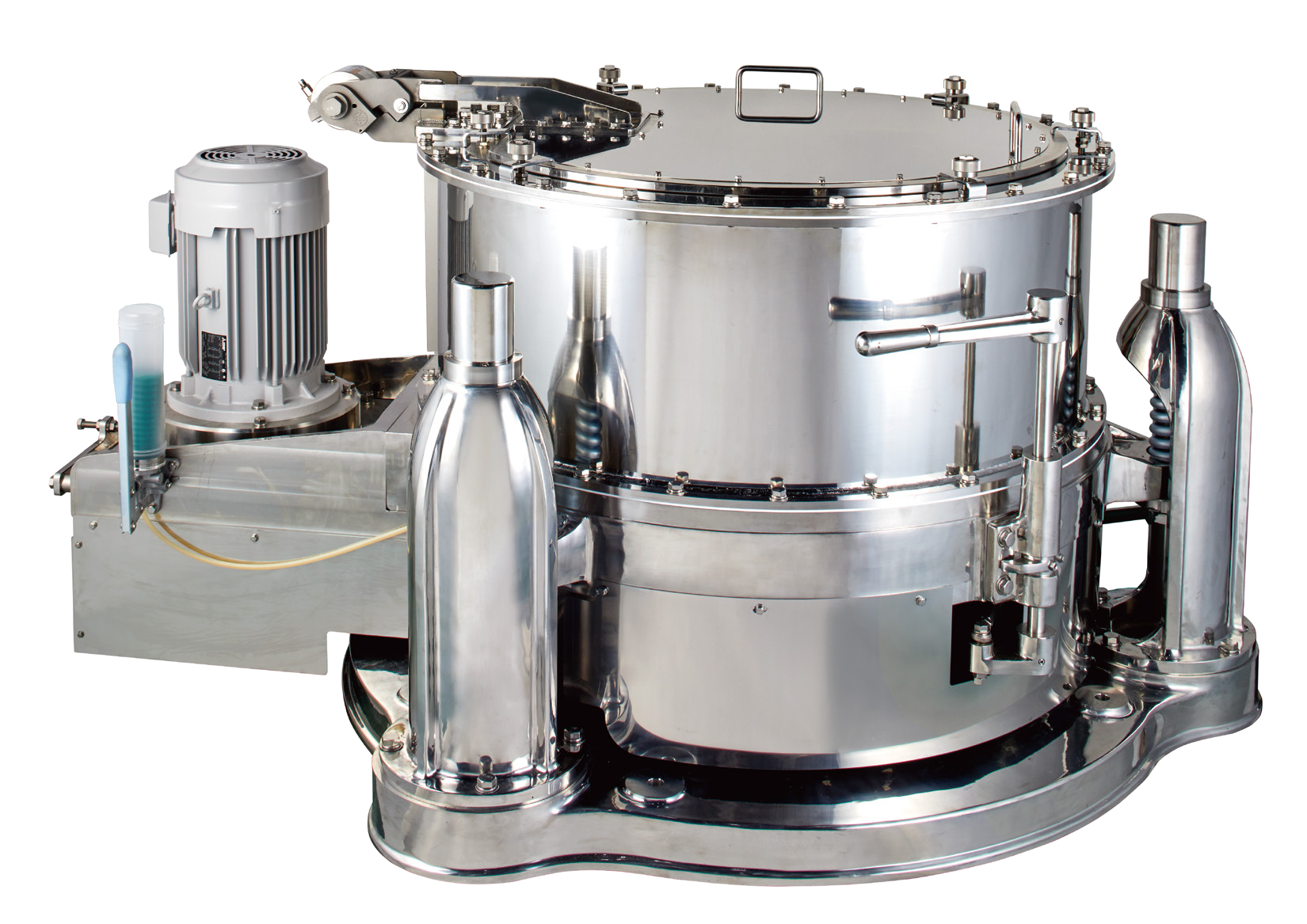
Choose between two separation methods
KBS · sedimentation
An imperforate basket collects solids on its inner wall.
KMN · filtration
A perforated basket and filter medium pass liquid while retaining solids.
KBS series · sedimentation
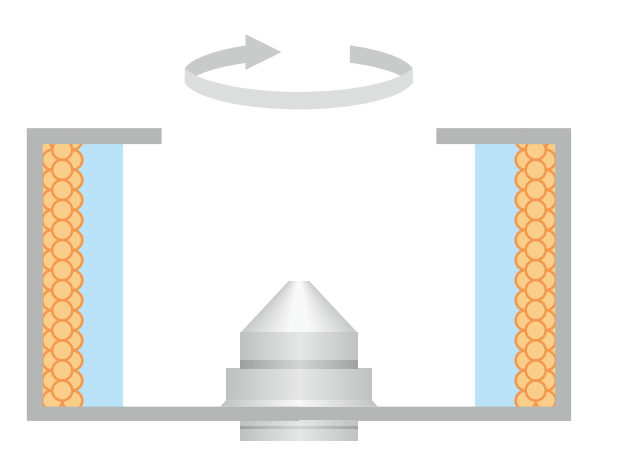
An imperforate basket separates by density difference without a filter cloth. Solids settle and accumulate on the inner wall. Separated liquid leaves by overflow or a skimming device.
After confirming complete stop, recover solids from the top of the basket. Consider this method for feeds where filter-cloth clogging is a concern.
KBS specifications
| Model | Basket diameter × depth (mm) | Basket volume (L) | Speed (rpm) | RCF (G) | Reference weight (kg) |
|---|---|---|---|---|---|
| KBS-10 | 254×152 | 3 | 3,800 | 2,038 | 255 |
| KBS-12 | 305×200 | 5 | 3,500 | 2,075 | 260 |
| KBS-14 | 356×200 | 7 | 3,200 | 2,025 | 265 |
| KBS-15 | 381×250 | 10 | 3,100 | 2,034 | 340 |
| KBS-20 | 508×270 | 25 | 2,700 | 2,057 | 550 |
| KBS-24 | 610×270 | 34 | 2,500 | 2,118 | 640 |
| KBS-30 | 762×330 | 70 | 1,800 | 1,372 | 900 |
| KBS-36 | 914×380 | 100 | 1,600 | 1,230 | 1,350 |
Overall dimensions
| Model | A (mm) | B (mm) | C (mm) |
|---|---|---|---|
| KBS-10 | 645 | 1,070 | 660 |
| KBS-12 | 690 | 1,105 | 720 |
| KBS-14 | 720 | 1,210 | 770 |
| KBS-15 | 765 | 1,175 | 820 |
| KBS-20 | 835 | 1,485 | 990 |
| KBS-24 | 915 | 1,540 | 990 |
| KBS-30 | 1,085 | 1,760 | 1,095 |
| KBS-36 | 1,180 | 2,045 | 1,500 |
A, B and C correspond to the dimensional drawing in the catalog. Confirm the actual machine drawing before installation.
Catalog values are reference specifications. Dimensions, weight and operating conditions vary with the configuration. Refer to the drawing and specification for the actual machine when planning installation.
KMN series · filtration
A filter bag sits inside the perforated basket. Centrifugal force drives liquid through the medium and the basket holes; retained solids can be recovered from the top together with the bag.
A filter-cloth lifting option can reduce handling effort. Discuss hoist and installation requirements with us.
KMN specifications
| Model | Basket diameter × depth (mm) | Basket volume (L) | Speed (rpm) | RCF (G) | Reference weight (kg) |
|---|---|---|---|---|---|
| KMN-10 | 254×152 | 3 | 3,000 | 1,270 | 255 |
| KMN-12 | 305×200 | 5 | 2,500 | 1,058 | 260 |
| KMN-14 | 356×200 | 7 | 2,500 | 1,234 | 265 |
| KMN-15 | 381×250 | 10 | 2,300 | 1,121 | 340 |
| KMN-20 | 508×270 | 25 | 1,800 | 915 | 550 |
| KMN-24 | 610×270 | 34 | 1,600 | 867 | 640 |
| KMN-30 | 762×330 | 70 | 1,200 | 610 | 900 |
| KMN-36 | 914×380 | 100 | 1,100 | 615 | 1,350 |
Overall dimensions
| Model | A (mm) | B (mm) | C (mm) |
|---|---|---|---|
| KMN-10 | 440 | 730 | 485 |
| KMN-12 | 605 | 1,105 | 720 |
| KMN-14 | 605 | 1,105 | 740 |
| KMN-15 | 680 | 1,175 | 830 |
| KMN-20 | 765 | 1,320 | 910 |
| KMN-24 | 835 | 1,540 | 990 |
| KMN-30 | 945 | 1,760 | 1,095 |
| KMN-36 | 1,000 | 2,045 | 1,500 |
A, B and C correspond to the dimensional drawing in the catalog. Confirm the actual machine drawing before installation.
Catalog values are reference specifications. Dimensions, weight and operating conditions vary with the configuration. Refer to the drawing and specification for the actual machine when planning installation.
Plan recovery, cleaning and the next batch
Basket volume and recommended solids accumulation
The recommended solids accumulation is approximately 60% of basket volume. Basket volume is not hourly throughput. Model selection also depends on feed properties, required separation and solids recovery frequency.
-
Separate
Select sedimentation or filtration for the feed.
-
Recover from the top
Confirm complete stop before recovery. KMN can recover solids with the filter bag.
-
Prepare for the next batch
Discuss casing opening and cleaning nozzles for routine cleaning or product changes.
Research and small batches
KBS / KMN sizes 10, 12, 14 and 15 can be configured with casing opening, heating / cooling and explosion-proof specifications.
Filter bags
Bag materials and air permeability are selected together with the feed conditions and recovery method.
Always follow the instruction manual for the actual machine.