
Basket centrifuge
SOLID–LIQUID SEPARATION · DEWATERING · DEOILING
Basket centrifuge
Choose the separation method and the solids recovery method to match your process. From small research batches to automated production cycles.
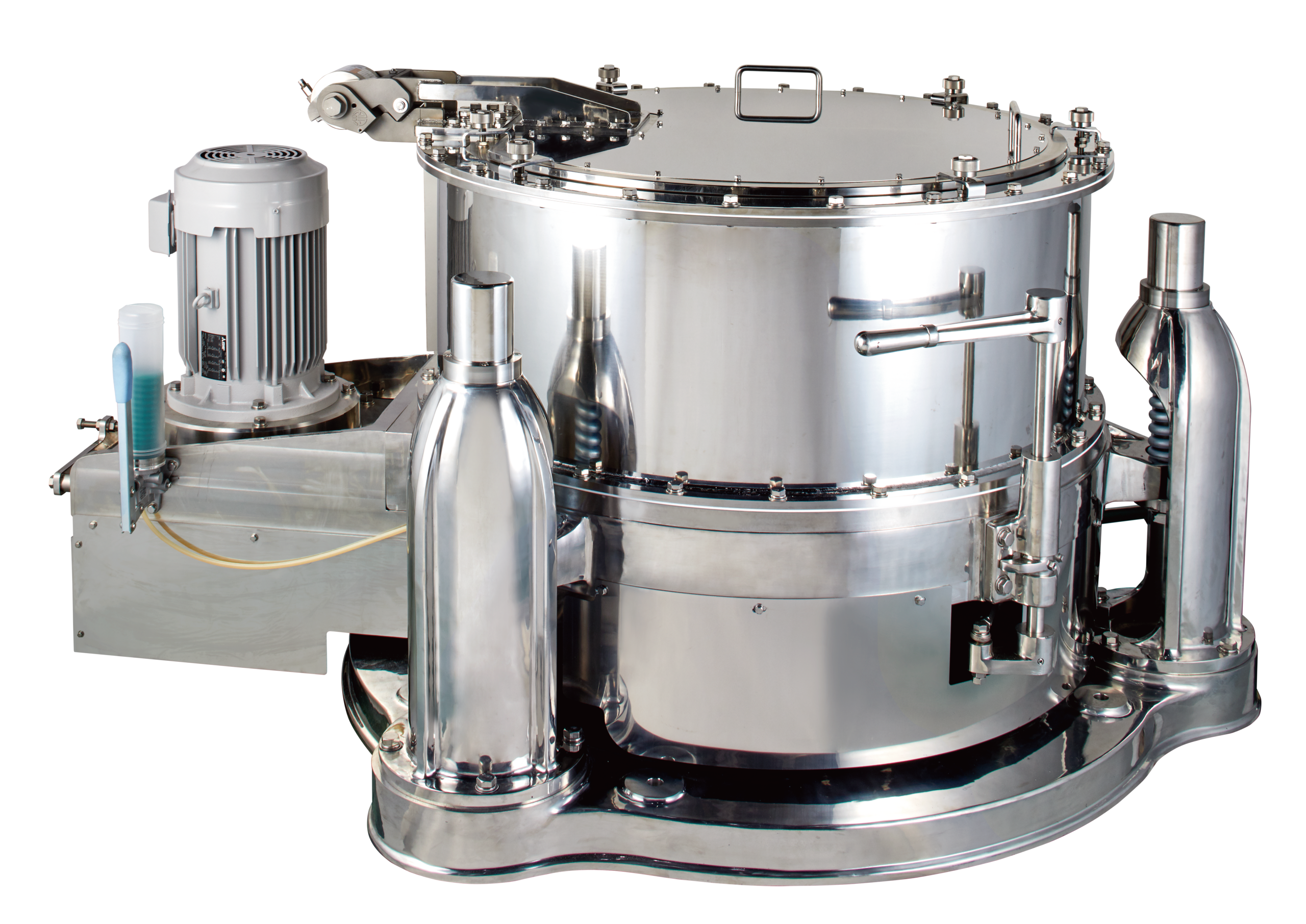
Recover solids, clarify liquids or remove retained liquid
Recover solids
Separate particles or crystals and recover the solids retained in the basket.
Clarify liquids
Remove suspended solids and recover the separated liquid.
Dewater or deoil
Use centrifugal force to reduce water or oil retained by solids.
Two separation methods
Sedimentation · imperforate basket
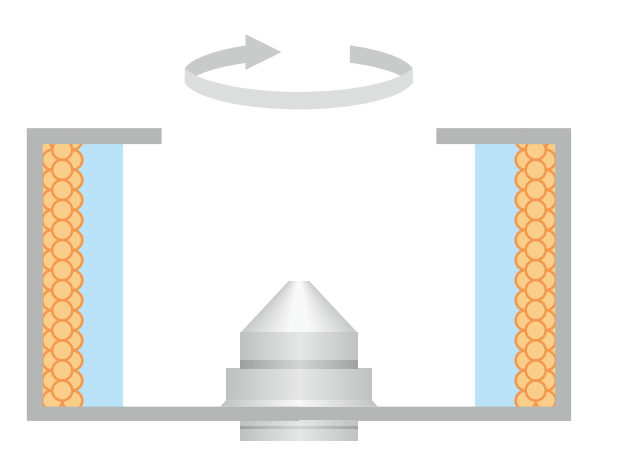
Density differences cause solids to accumulate on the inner wall. Liquid overflows from the top or is recovered by a skimmer. No filter cloth is used. KBS / KDB / KFB.
Filtration · perforated basket and filter medium
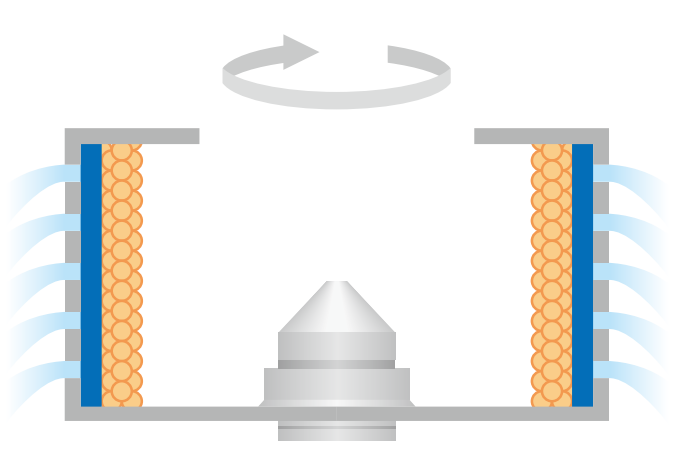
Liquid passes through the filter medium and basket holes. Solids remain on the inner side of the filter medium. KMN / BDC / KFC.
Liquid and solids recovery arrangements vary with the model and specification.
From feeding to solids recovery
Example of a sedimentation basket with skimming and scraping devices.
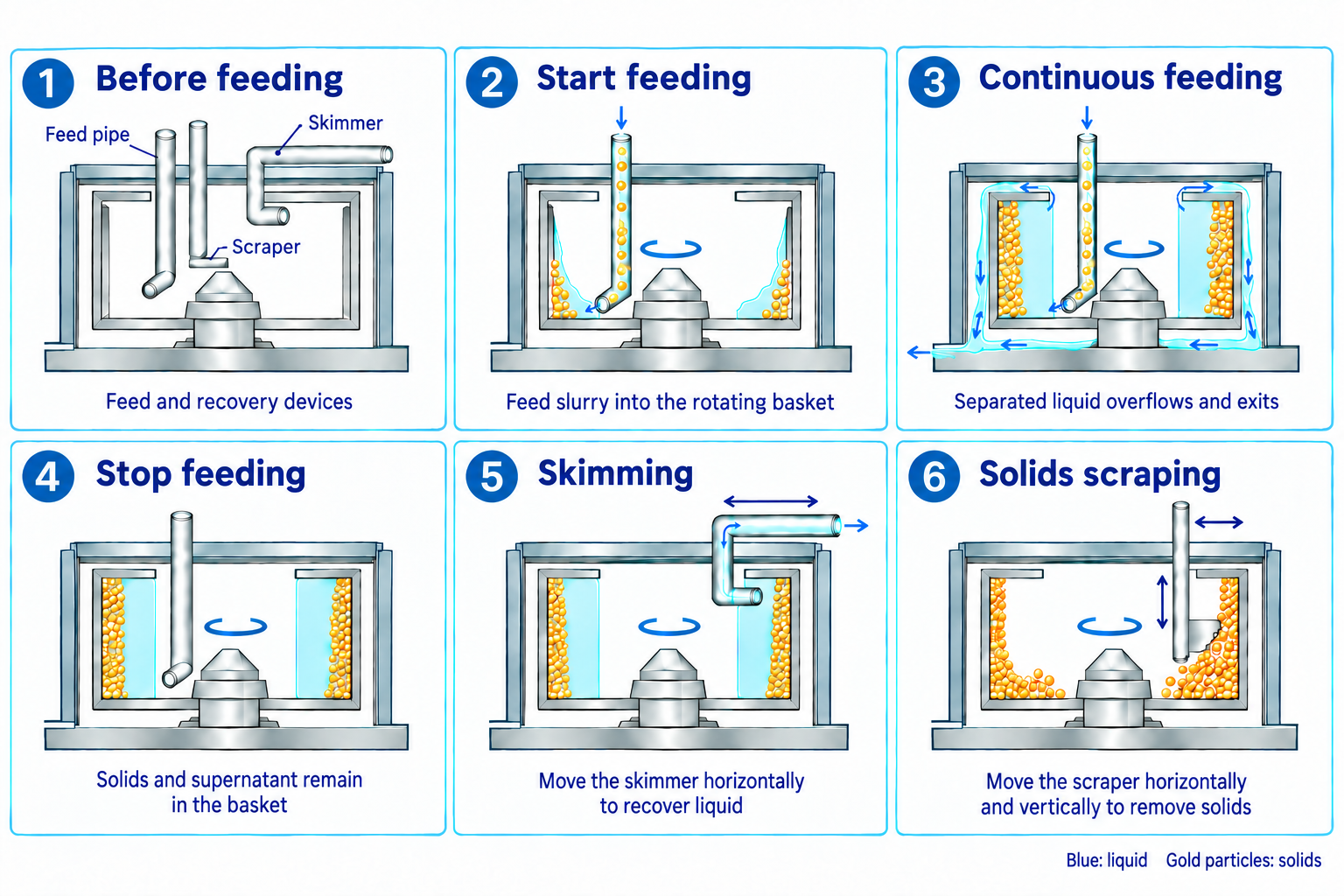
Equipment configuration and operating conditions depend on the model. Follow the instruction manual for the supplied machine.
Select the discharge method
| Solids recovery | Sedimentation | Filtration |
|---|---|---|
| Top discharge | KBS | KMN |
| Bottom discharge | KDB | BDC |
| Automatic scraping / bottom discharge | KFB | KFC |
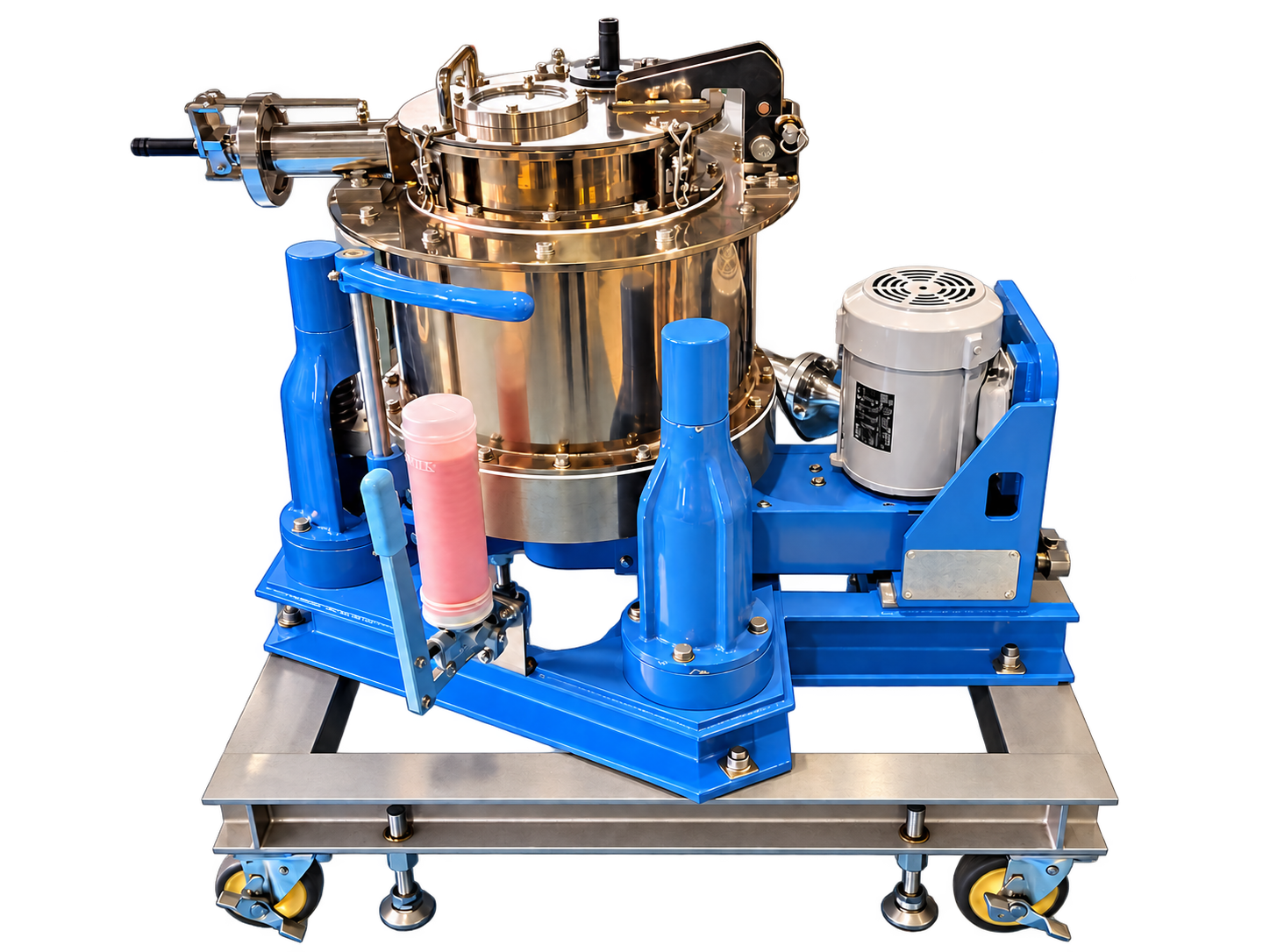
KBS / KMN · top discharge
Open the top and recover solids after confirming the basket has fully stopped. Laboratory sizes are included within these series. KMN supports recovery together with the filter bag.
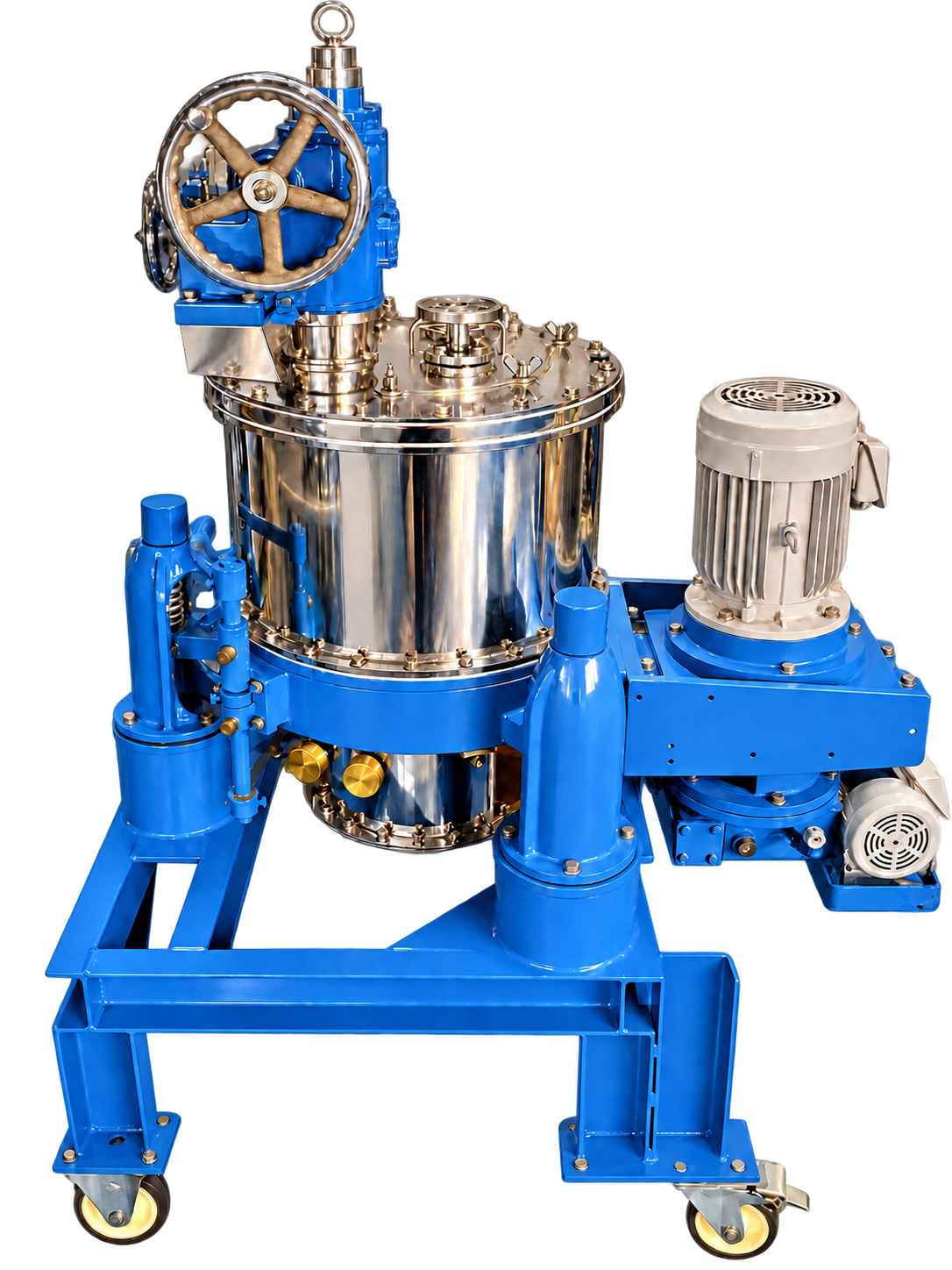
KDB / BDC · bottom discharge
After separation, switch to the specified low-speed operation and scrape solids through the bottom. Suitable for frequent solids recovery.
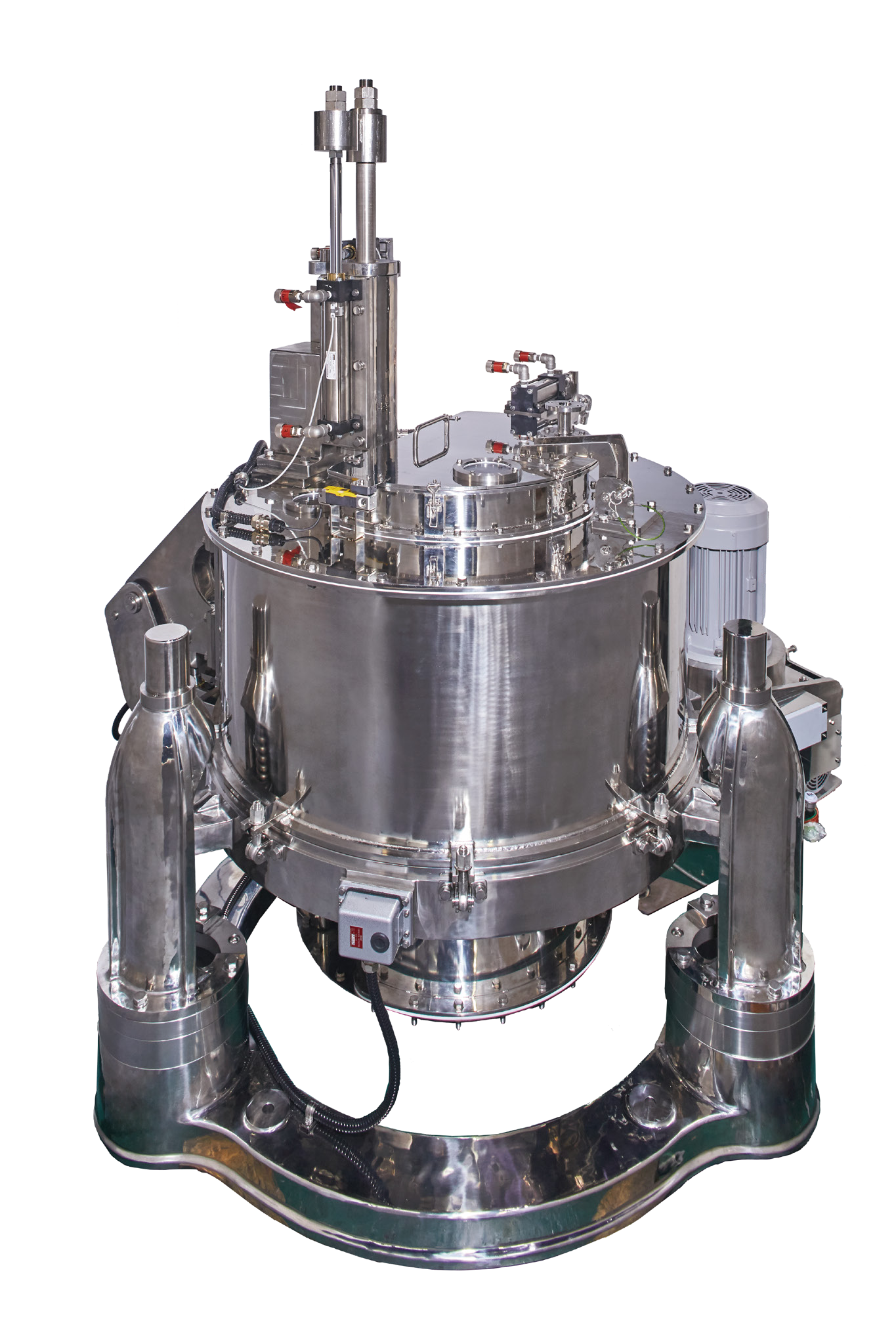
KFB / KFC · automatic cycling
Combine automatic scraping, skimming, drives and controls to repeat the feed, separation and recovery cycle.
Special models for specific applications
Special models: KO oil–water separation / KT deoiling and dewatering →
Principal specifications by separation and discharge method
Sedimentation: imperforate baskets
| Discharge | Series / sizes | Basket volume range | Highest RCF in listed range |
|---|---|---|---|
| Top discharge | KBS laboratory · 10 / 12 / 14 / 15 | 3–10 L | 2,075 G |
| Top discharge | KBS · 20 / 24 / 30 / 36 | 25–100 L | 2,118 G |
| Bottom discharge | KDB · 15 / 24 / 30 / 36 | 12–100 L | 2,118 G |
| Automatic bottom discharge | KFB · 15 / 24 / 30 / 36 | 12–100 L | 2,118 G |
Filtration: perforated baskets with filter media
| Discharge | Series / sizes | Basket volume range | Highest RCF in listed range |
|---|---|---|---|
| Top discharge | KMN laboratory · 10 / 12 / 14 / 15 | 3–10 L | 1,270 G |
| Top discharge | KMN · 20 / 24 / 30 / 36 | 25–100 L | 915 G |
| Bottom discharge | BDC · 15 / 24 / 30 / 36 | 12–100 L | 1,121 G |
| Automatic bottom discharge | KFC · 15 / 24 / 30 / 36 | 12–100 L | 1,121 G |
The RCF is the highest value among the sizes in each row, not a value shared by every machine. See the individual series pages for speed, dimensions and weight.
The recommended solids accumulation is approximately 60% of basket volume. Basket volume is not hourly throughput. Model selection also depends on feed properties, required separation and solids recovery frequency.
Materials and options
Wetted parts & corrosion resistance
Materials and options such as rubber or PTFE lining can be discussed for the process liquid.
Explosion-proof specification
Tell us the substances handled, installation site and required explosion-proof conditions.
Filter cloth and bags
Select the material and air permeability for the feed and separation conditions.
Cleaning & recovery assistance
Basket washing nozzles, air nozzles to assist cake release, and filter-cloth lifting arrangements are available.
Temperature control
Cooling coils are available. Heating or cooling equipment can be discussed for laboratory models.
Automation
Combine automatic scraping, skimming, casing opening mechanisms and controls to suit the process.
The applicable options and their combinations vary with the model and processing conditions.
Frequently asked questions
Can one machine perform both sedimentation and filtration?
Changing the basket section can make this possible. We will check the model and operating conditions before specifying the required configuration.
Can high-solids feed be processed?
Fluid feed can be considered. We also check viscosity, the nature of the solids and the feed method.
Which separation method should I choose?
Particle size, density difference and filterability are key. Sedimentation may be an option if filter-cloth clogging is a concern. We can test the actual feed.
Can I test before purchasing?
Sample testing and demo rental are available for consultation. We will confirm the material, test objective, location and suitable model.