
KS ultra high-speed centrifuge
FINE PARTICLES · CLARIFICATION · CLASSIFICATION
KS ultra high-speed centrifuge
Recover fine solids, clarify liquids and separate immiscible liquids using the high centrifugal force of a vertical tubular bowl.
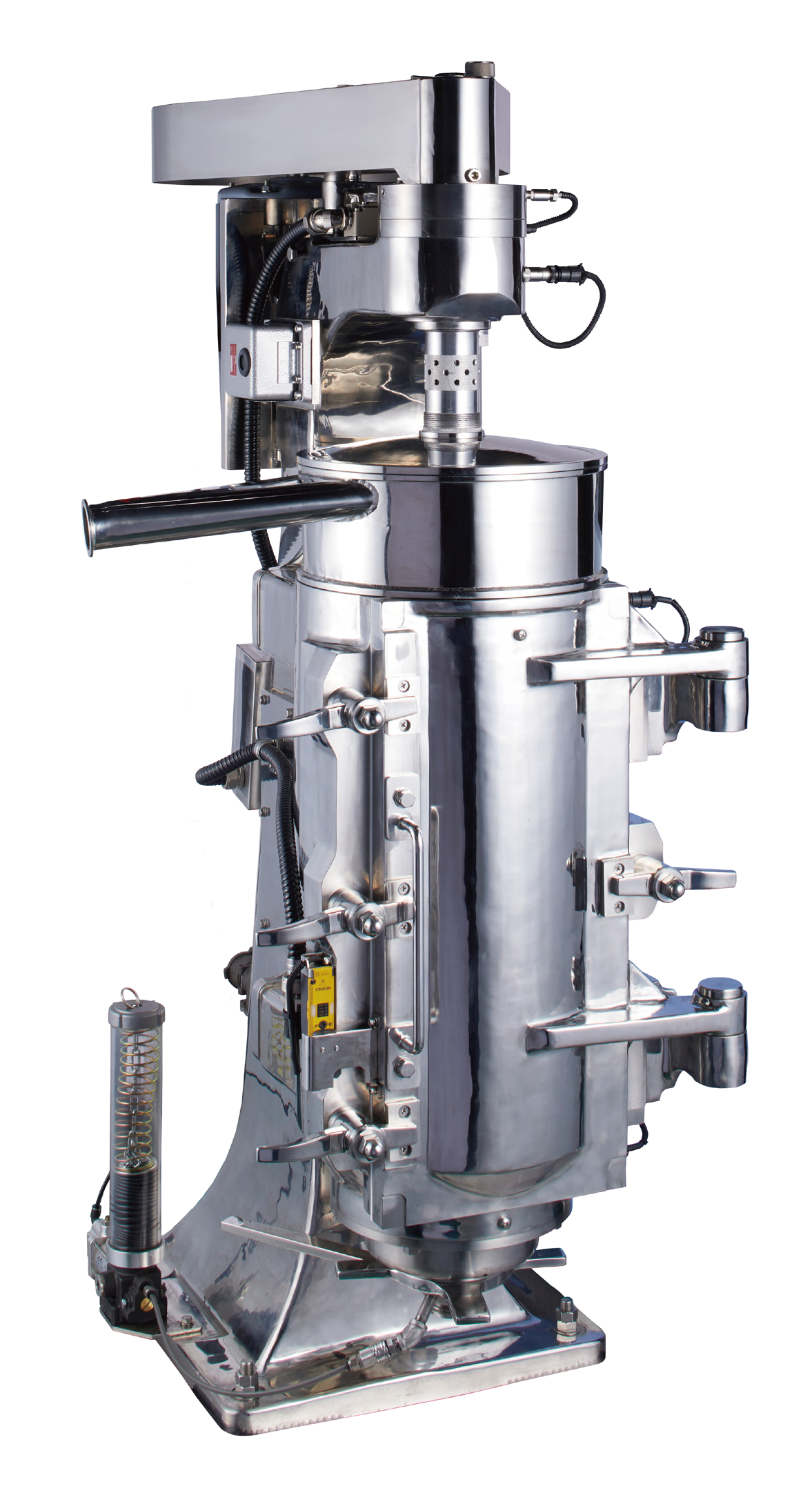
Specifications up to 40,000 G are available (U4 / No.180). Centrifugal force varies with the model and configuration.
What would you like to separate?
Fine solids & clarification
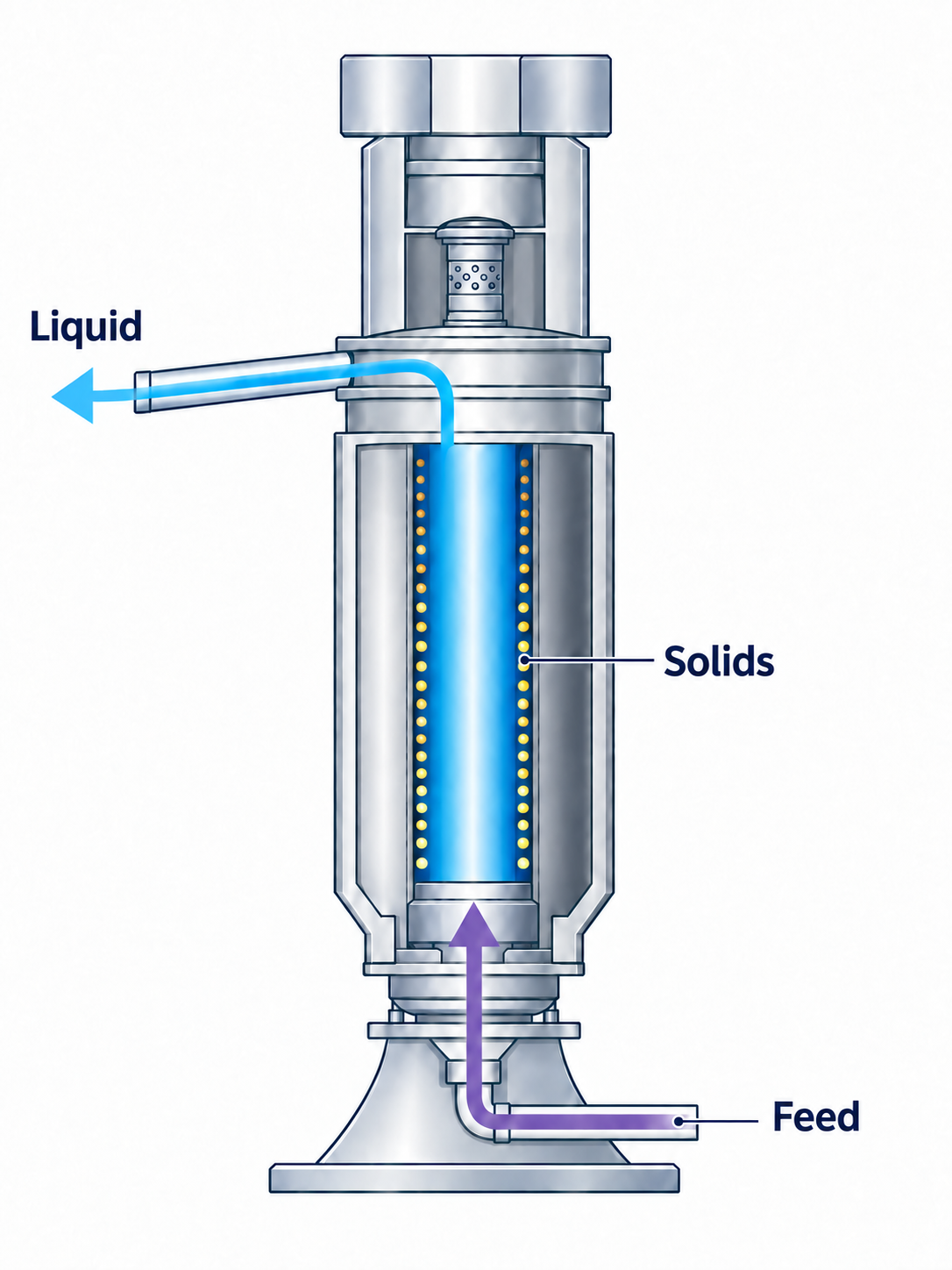
Recover microorganisms or fine metal particles. Solids accumulate on the inner wall of the bowl while clarified liquid is discharged.
Liquid–liquid & three-phase separation
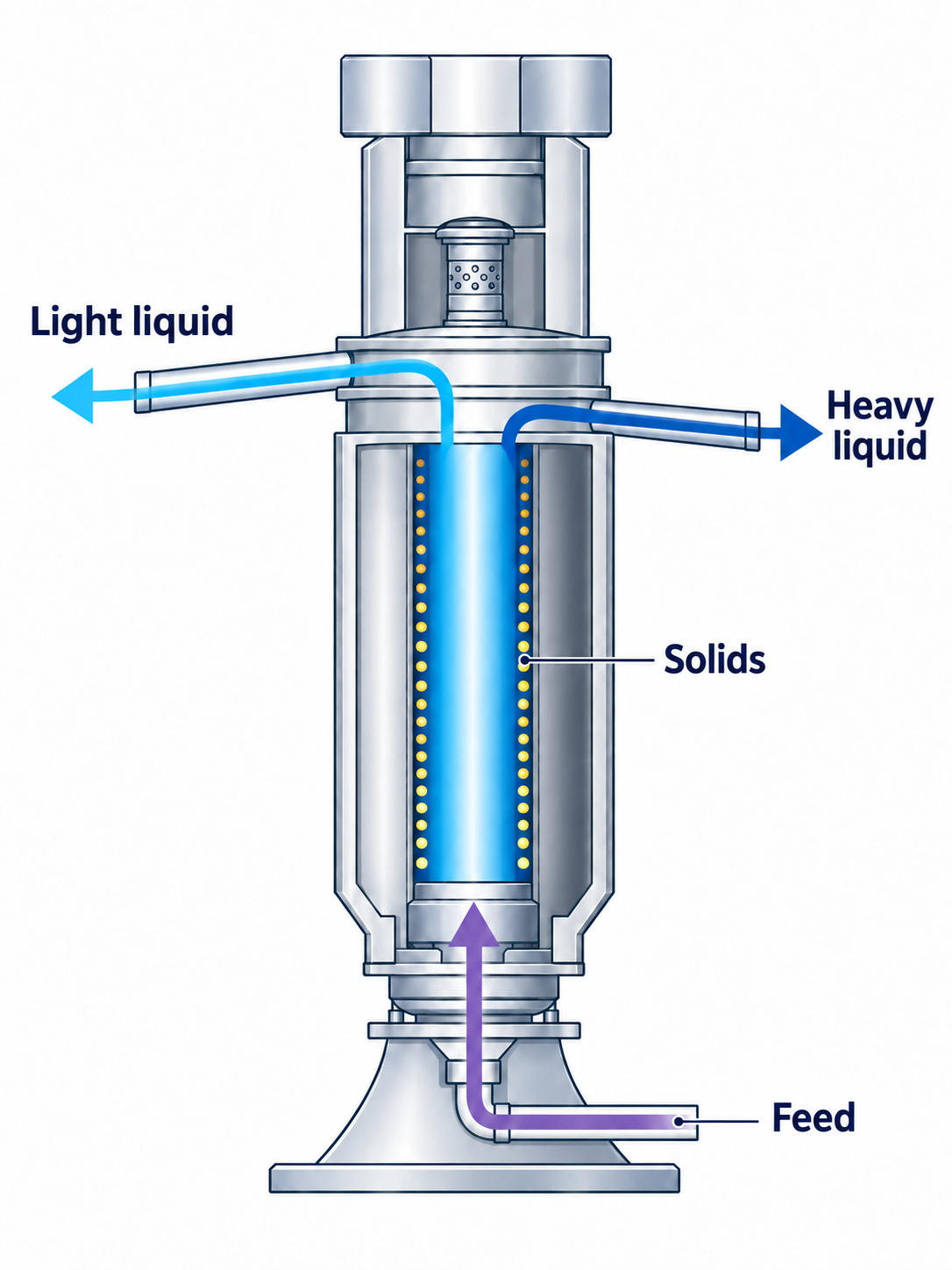
Separate immiscible liquids with different densities. Light and heavy liquids leave through separate outlets; solids remain in the bowl.
Particle classification
Use differences in settling behaviour to recover a selected particle-size fraction. Confirm the operating conditions with a sample test.
- Separation method
- Centrifugal sedimentation
- Liquid recovery
- Continuous discharge during feeding
- Solids recovery
- Remove the bowl and recover solids manually
From feeding to separation and recovery
During operation, feed and liquid discharge are continuous. Accumulated solids are removed after the machine has been stopped.
Solid–liquid separation
Liquid–liquid separation
-
Feed from below
Supply the process liquid through the lower nozzle from a head tank or pump.
-
Separate in the rotating bowl
Denser solids settle against the inner wall. In a liquid–liquid configuration, the light and heavy phases also separate.
-
Recover the liquid continuously
Recover clarified liquid, or separate light and heavy liquid streams, through the upper outlets.
Solids recovery after stopping
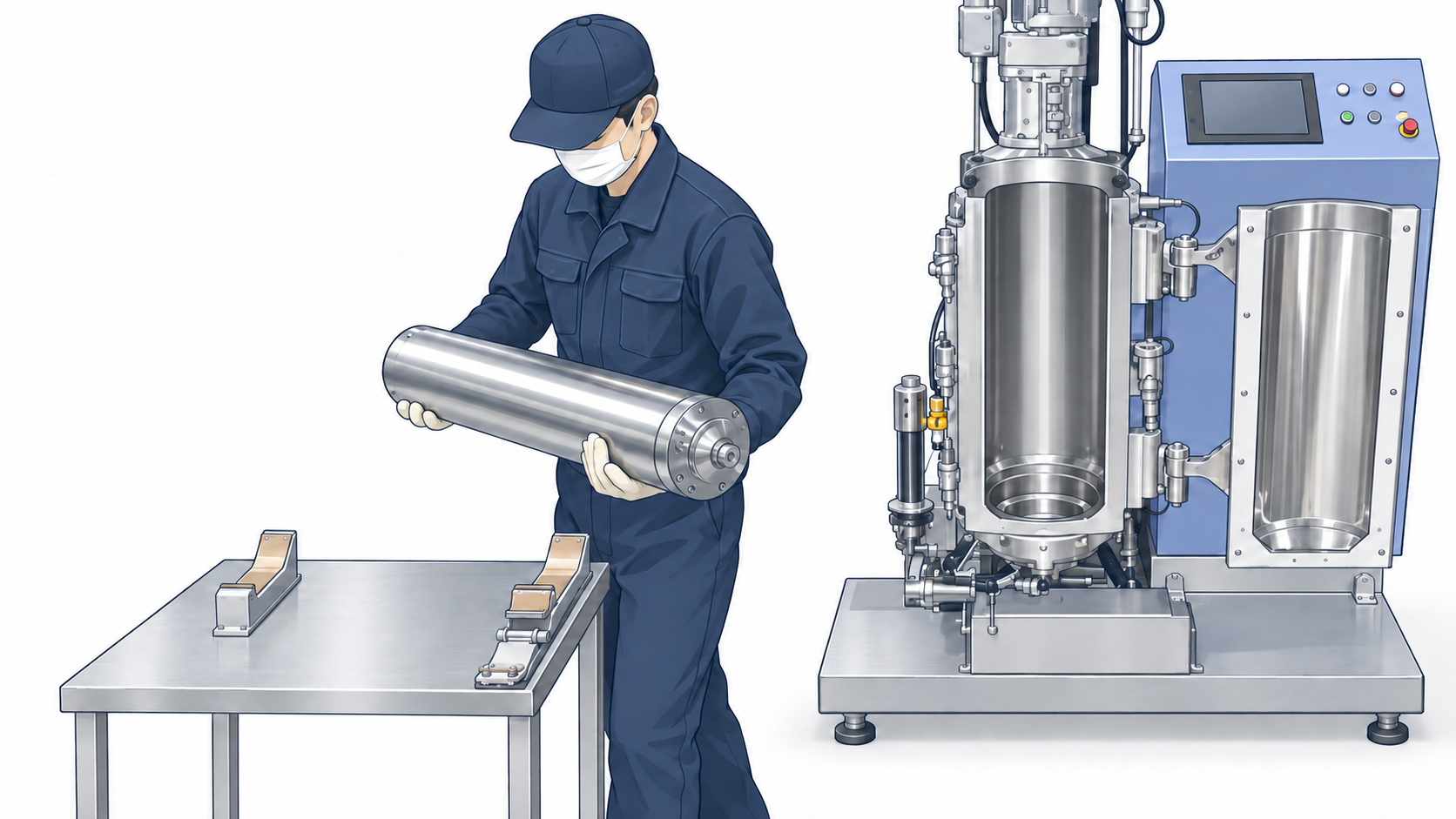
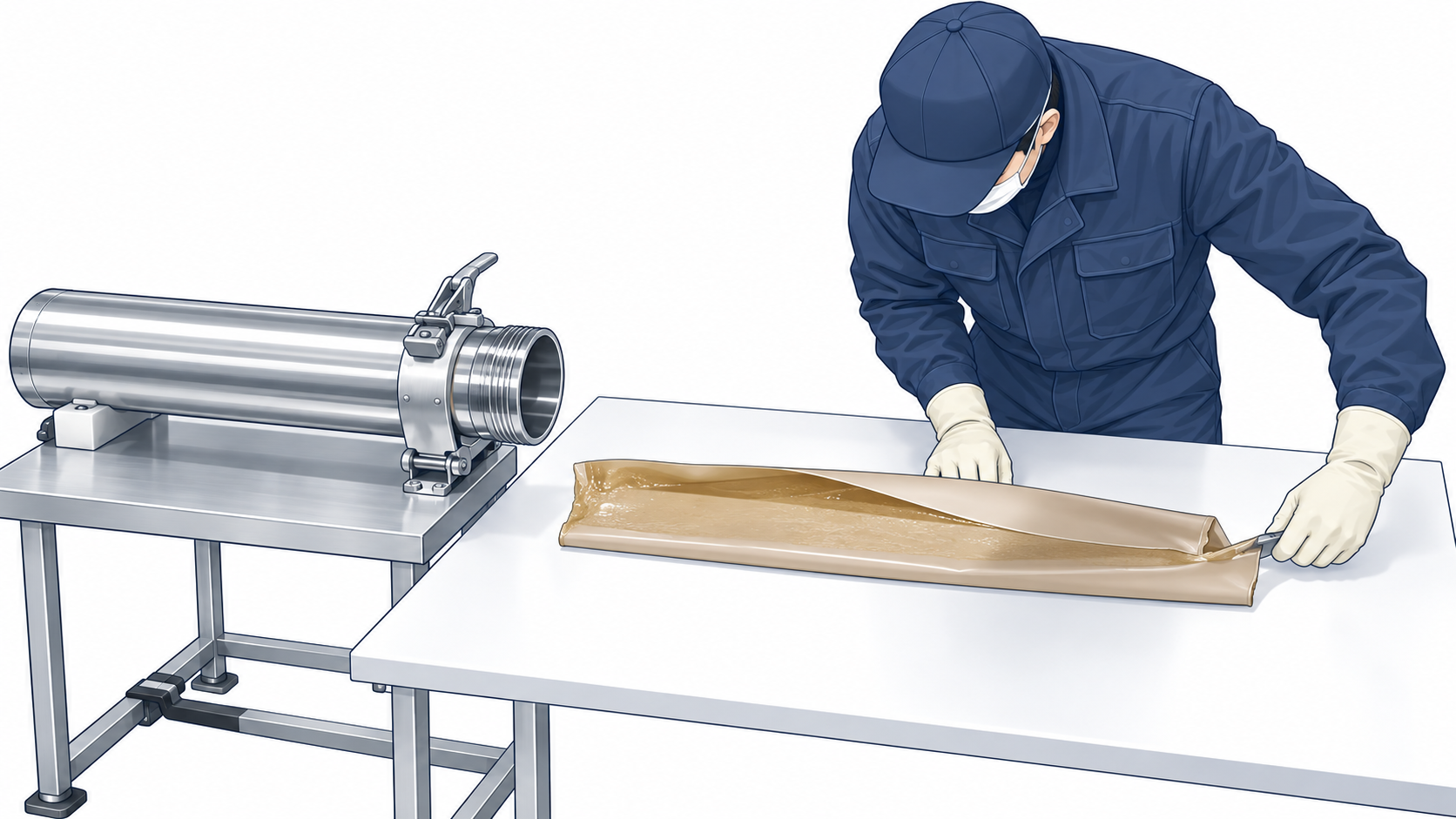
These illustrations show the principle and a typical recovery method. Follow the instruction manual for the supplied machine; removal and recovery procedures differ by configuration.
Configurations for your working environment
U4-180-HOS
Front-opening, open type
The front of the frame opens to give access to the bowl and lower bearing, helping with bowl removal, cleaning and parts replacement.
- Stainless steel
- Solid–liquid separation
- Up to 40,000 G
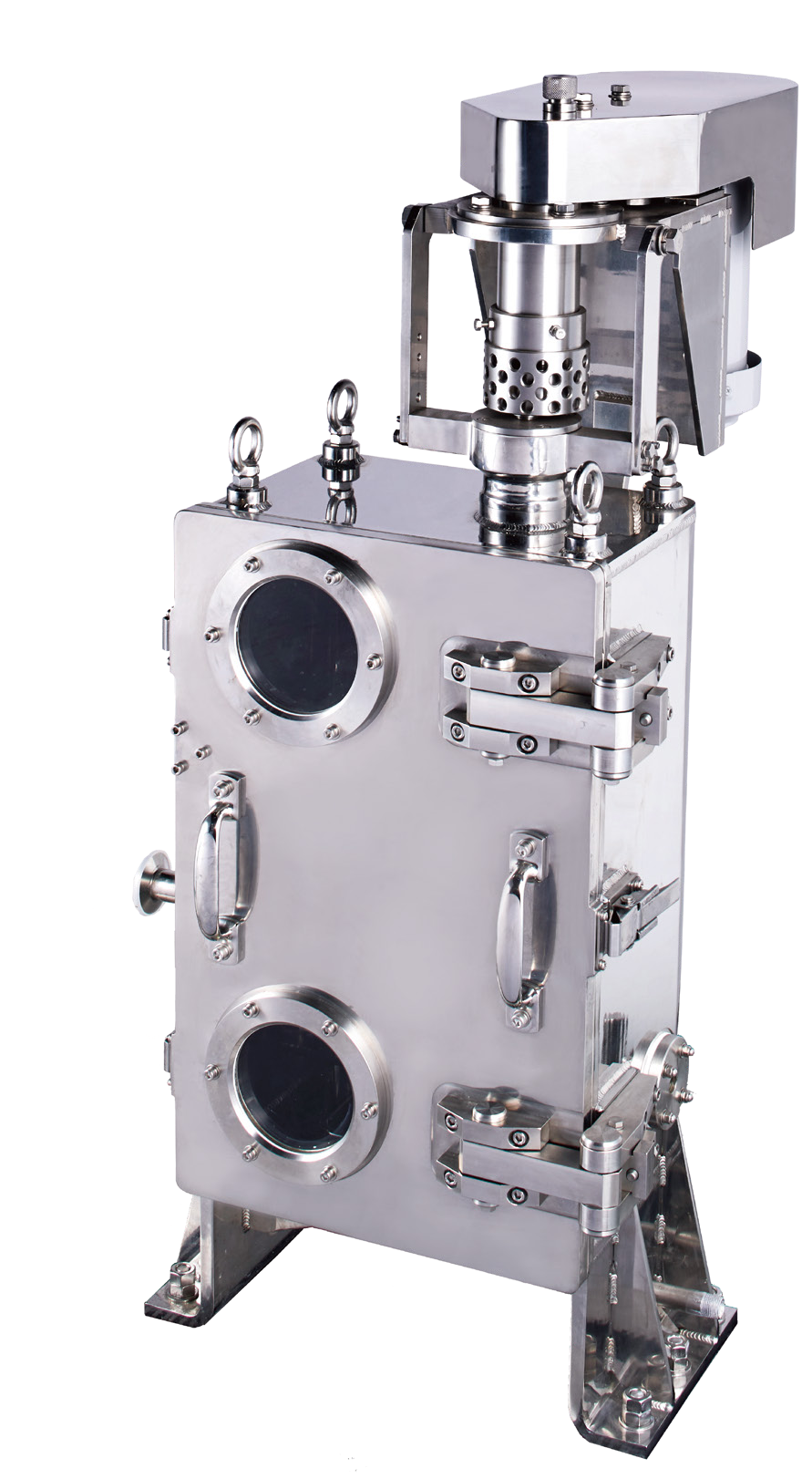
U1-1-HR · laboratory model
Enclosed box type
A box-shaped frame surrounds the rotating section. Sealing and pipe connections are considered together with the required containment.
- Stainless steel
- Solid–liquid separation
- Up to 20,000 G
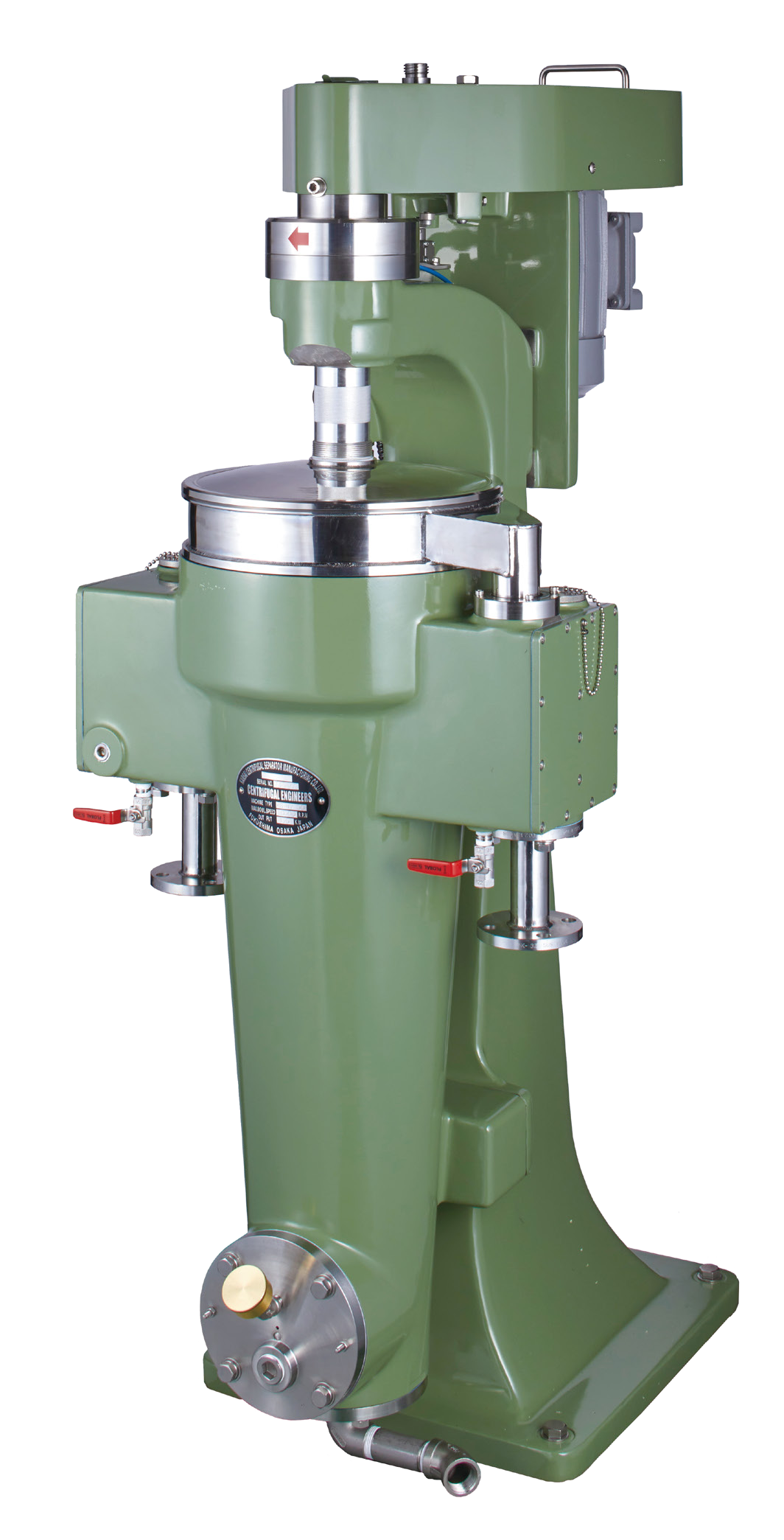
KS-55-NV
Special configuration
For duties such as separating water and sludge from fuel or lubricating oil. Selected to suit the separation objective.
- Cast iron
- Liquid–liquid / three-phase separation
- Up to 15,000 G
Photos and figures are examples from the catalog. Materials, separation configuration and accessories are selected for your feed and operating conditions.
Model range and principal specifications
From research and trials to production: choose capacity and centrifugal force together. Bowl volume ranges from 0.3 to 18.7 L.
| Model | Bowl volume (L) | Operating liquid volume, SS (L) | Maximum accumulated solids (L) |
|---|---|---|---|
| No.1 | 0.3 | 0.28 | 0.09 |
| No.140 | 2.0 | 1.63 | 0.54 |
| No.140 | 3.1 | 2.55 | 0.84 |
| No.140 | 4.1 | 3.39 | 1.12 |
| No.150 | 5.5 | 4.50 | 1.49 |
| No.160 | 6.3 | 5.18 | 1.71 |
| No.180 | 9.0 | 7.45 | 2.46 |
| No.1100 | 13.0 | 10.74 | 3.55 |
| No.1500 | 18.7 | 15.88 | 5.24 |
Some model numbers have more than one bowl capacity. We will advise on combinations of the U0–U4 force range and bowl size. Bowl volume is not hourly throughput.
Confirm throughput for your material and operating conditions
Throughput depends on density difference, particle size, viscosity, solids concentration and target separation. We can check operating conditions in a sample test.
Materials, accessories and explosion-proof specifications
Wetted materials
Discuss stainless steel, titanium or Hastelloy for the relevant components. We check the liquid composition, concentration, temperature and cleaning conditions.
Handling & maintenance
Options include a bowl-handling balancer, movable trolley, automatic grease pump and sound-insulating enclosure. Availability depends on the configuration.
Explosion-proof specifications
Explosion-proof configurations are available. Tell us the materials handled, installation environment and required conditions so we can specify the appropriate equipment.
Frequently asked questions
Can it run continuously?
Feed and liquid discharge can be continuous. Solids accumulate in the bowl; stop the machine and remove the bowl for manual solids recovery.
Can a solid–liquid model be converted for liquid–liquid separation?
Parts replacement is required. Please provide the model, serial number and desired separation duty so we can check the existing specification.
What if the model or throughput is not yet known?
Tell us the material, target throughput and components to recover. You can enquire with incomplete data; sample testing can help with selection.
Is after-sales support available?
We provide inspection, maintenance, repair and parts support. Please provide your machine details and location so we can confirm the appropriate arrangements.
Compare centrifuges →Demo machine rental →After-sales support →